
India’s Strategic Opportunity in the Global Lunar Fission Power Race
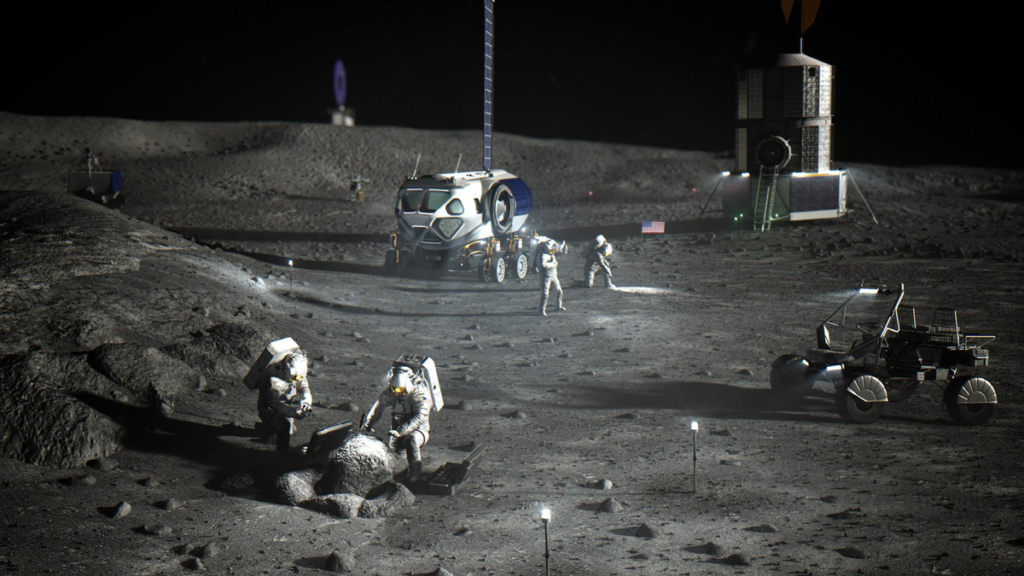
The prospect of sustained human presence on the Moon has necessitated a reliable, continuous power source, which solar energy cannot provide due to the two-week-long lunar night and shadowed regions, especially near the resource-rich South Pole. In response, global powers, led by the United States and China, are accelerating efforts to deploy compact nuclear fission reactors on the lunar surface by the early 2030s. This Lunar Fission Surface Power (FSP) technology is deemed crucial for generating the tens to hundreds of kilowatts required to operate long-term habitats, life support systems, science laboratories, and most importantly, In-Situ Resource Utilization (ISRU) processes, such as extracting water and oxygen from lunar soil. This initiative is viewed not just as a technological milestone but as a strategic infrastructure race, where establishing permanent energy sources directly translates into geopolitical influence over key lunar regions.
This global pivot towards space nuclear power presents a significant opportunity for India to assert its leadership in deep-space innovation. By leveraging the combined expertise of the Indian Space Research Organisation (ISRO) and the Department of Atomic Energy (DAE), India can strategically develop its own space reactor capabilities, building upon its existing work on Radioisotope Thermoelectric Generators (RTGs). Furthermore, as the deployment of nuclear reactors in space raises serious ethical and environmental concerns—including reactor safety protocols and the risk of nuclear contamination of celestial bodies—India is uniquely positioned to advocate for a robust, updated international legal framework. By pushing for binding safety and environmental protocols to supplement existing non-binding guidelines like the UN’s 1992 Principles, India can champion the responsible and safe utilization of nuclear energy in space exploration for all nations.