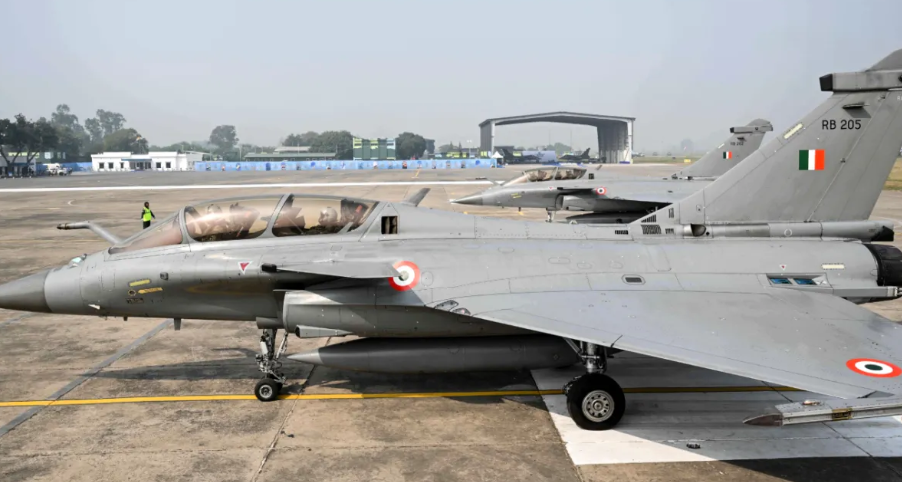
IAF & Navy Power-Up: Historic Approval for 114 Rafales and 6 Advanced Surveillance Planes
In a monumental move to fortify India’s national security and modernize its aging fleet, the Defence Acquisition Council (DAC), chaired by Union Defence Minister Rajnath Singh, has officially accorded the Acceptance of Necessity (AoN) for the procurement of 114 Rafale multi-role fighter jets and 6 P-8I Poseidon maritime surveillance aircraft. This decision, finalized on February 12, 2026, marks one of the largest defense acquisitions in India’s history, with an estimated valuation of over ₹3.25 lakh crore. The move is strategically timed to address the depleting squadron strength of the Indian Air Force (IAF) and to counter the growing maritime challenges posed by adversarial movements in the Indian Ocean Region.
The acquisition of the 114 Rafale jets—often referred to as the MRFA (Multi-Role Fighter Aircraft) program—is designed to be a cornerstone of the ‘Make in India’ initiative. Under the approved framework, only the initial 18 aircraft will be delivered in a “fly-away” condition from France, while the remaining 96 will be manufactured within India through a strategic partnership with a domestic defense major. This 4.5-generation fighter is equipped with state-of-the-art electronic warfare suites, long-range Meteor air-to-air missiles, and the SCALP cruise missile, providing the IAF with a significant edge in both defensive and offensive operations. By producing the bulk of these jets domestically, India aims to reduce its reliance on foreign original equipment manufacturers and foster a robust aerospace ecosystem.
Simultaneously, the naval wing of the Indian Armed Forces is set for a major upgrade with the approval of 6 additional P-8I Poseidon aircraft. These long-range maritime reconnaissance and anti-submarine warfare (ASW) planes are crucial for maintaining dominance over the high seas. As the Chinese Navy increases its footprint in the Indo-Pacific, the P-8I fleet acts as India’s “eyes and ears,” capable of detecting silent submarines and tracking surface vessels across vast distances. The inclusion of these six units will provide the Indian Navy with a total fleet of 18 P-8Is, ensuring a persistent and impenetrable surveillance net across the critical sea lanes of communication.
Beyond the mere addition of hardware, this approval signals India’s shift toward long-term strategic autonomy. The Rajnath Singh-led council emphasized that these platforms would eventually be integrated with indigenous weapons systems and sensors to enhance their lethality. Political and military analysts believe that this massive procurement not only fills critical capability gaps but also serves as a strong deterrent against regional instability. With the formal green light now in place, the defense ministry will move toward final price negotiations and contract signing, paving the way for a technologically superior and self-reliant Indian military in the decade to come.