
Antarctica’s “Ring of Fire”: Rare Annular Solar Eclipse Peaks Today Over the Remote South
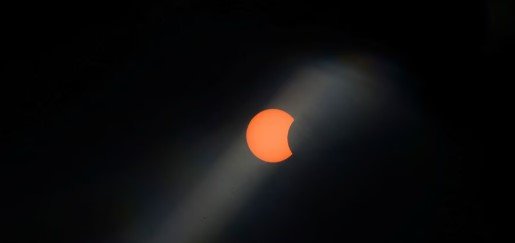
The first major celestial event of the year, a breathtaking annular solar eclipse, is set to reach its peak today, February 17, 2026, offering a rare “Ring of Fire” spectacle primarily to the remote wilderness of Antarctica. Beginning its journey at 09:56 UTC (3:26 PM IST), the Moon will align between the Earth and the Sun, but due to its current distance from our planet, it will appear slightly smaller in the sky, failing to cover the solar disk completely. This orbital choreography creates the iconic “annulus,” a brilliant halo of sunlight that will last for approximately 2 minutes and 20 seconds at the point of maximum eclipse, which is expected at 12:12 UTC (5:42 PM IST). While the path of annularity—the 616-kilometer-wide track where the full ring is visible—traverses almost entirely over uninhabited Antarctic ice, research stations like the ESA’s Concordia and Russia’s Mirny find themselves in the direct shadow, making this an event witnessed by more penguins than people.
For skywatchers outside the frozen continent, the eclipse offers varying degrees of a partial view. Residents in the southern tips of South America, including Chile and Argentina, as well as southern African nations like South Africa, Namibia, and Madagascar, will see the Moon appear to take a “bite” out of the Sun during the afternoon hours. In Cape Town, for instance, a 5% partial eclipse will be visible if weather conditions remain clear. However, for those in India and most of the Northern Hemisphere, the event remains entirely invisible as the Sun will already be below the horizon during the eclipse window. Consequently, religious scholars have noted that the traditional Sutak Kaal—the inauspicious period typically observed 12 hours before a solar eclipse—does not apply in India this time, allowing daily rituals and temple visits to continue without interruption.
As the eclipse concludes its passage at 14:28 UTC (7:57 PM IST) over the Indian Ocean, astronomy enthusiasts globally are turning to digital platforms to witness the rare alignment. NASA and various international space agencies are providing high-definition livestreams from Antarctic outposts, ensuring that the “Ring of Fire” can be enjoyed safely from anywhere in the world. Experts remind anyone in the viewing path to never look directly at the Sun without certified ISO 12312-2 eclipse glasses, as even the sliver of light in an annular eclipse can cause permanent retinal damage. This event serves as a stunning prelude to the rest of the year’s astronomical calendar, which includes a total lunar eclipse in March and a highly anticipated total solar eclipse across Spain and Iceland this August.