
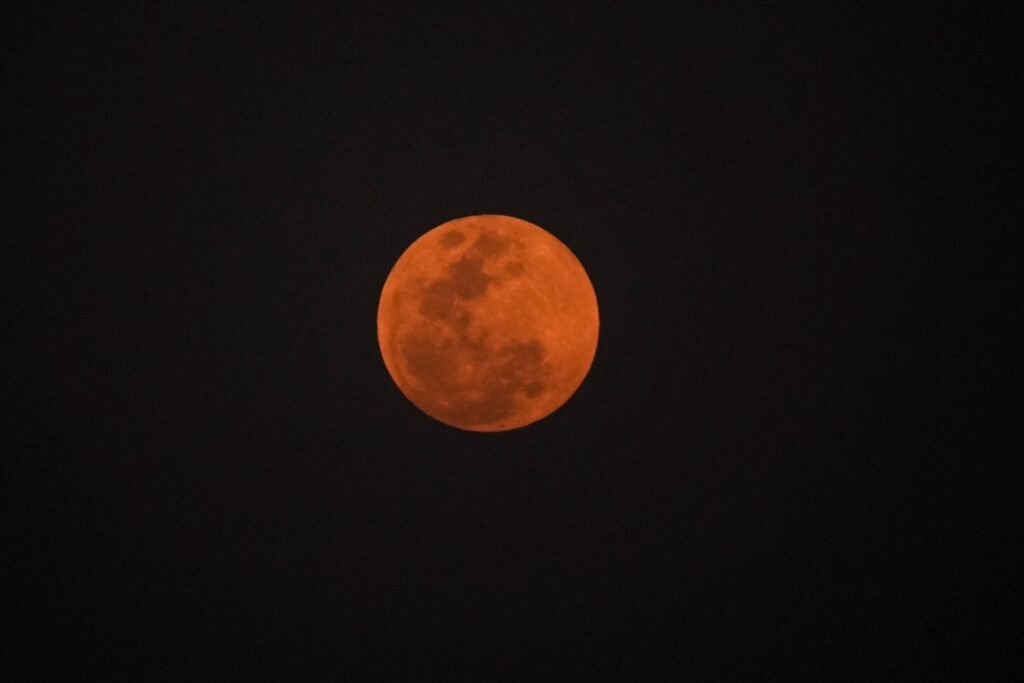
Total Lunar Eclipse on March 3 A Brief Blood Moon Spectacle to Coincide with Holi in India
Skywatchers across India are preparing for the first major celestial event of 2026 as a total lunar eclipse, popularly known as a “Blood Moon,” occurs on March 3. This event is particularly significant as it coincides with the Holi festival, a rare alignment that adds cultural and religious weight to the astronomical phenomenon. While the total phase of the eclipse—where the Moon takes on a deep reddish hue—will be fully visible in parts of the Americas and the Pacific, observers in India will primarily witness the concluding stages. Because the Moon will already be emerging from the Earth’s darkest shadow (the umbra) by the time it rises over the Indian horizon, the visible window for the most dramatic effects will be brief, lasting roughly 20 to 25 minutes in most cities.
In major Indian cities like New Delhi and Mumbai, the Moon is expected to rise between 6:18 PM and 6:38 PM IST, already in the final stages of its exit from the Earth’s shadow. The peak visible phase for Indian viewers will occur shortly after moonrise, typically between 6:33 PM and 6:40 PM IST, before the eclipse officially concludes its umbral phase around 6:47 PM IST. Scientific experts emphasize that, unlike solar eclipses, a lunar eclipse is entirely safe to view with the naked eye and requires no special equipment. For the best experience, enthusiasts are encouraged to find a location with an unobstructed view of the eastern horizon and to step outside just as dusk begins to settle.