
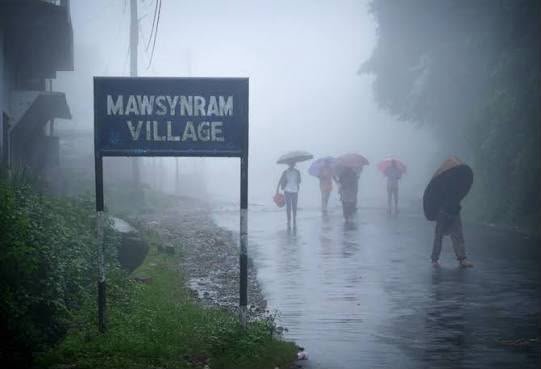
Meghalaya Records 58% Rainfall Deficit in June-July, Sohra and Mawsynram Also Face Dry Spell
Meghalaya experienced an unusually dry July this year, with all districts except South West Khasi Hills recording deficient or largely deficient rainfall, according to India Meteorological Department (IMD) data.
Five of the state’s 11 districts recorded rainfall deficits of 50 to 80 per cent below normal. South West Khasi Hills was the only exception, registering an 83 per cent surplus.
Even East Khasi Hills, home to the famously rain-rich areas of Sohra (Cherrapunji) and Mawsynram, recorded a deficit of nearly 50 per cent. The district normally receives around 2,796 mm of rainfall in July, but recorded only 1,403 mm this year.
West Jaintia Hills recorded the sharpest decline, with a 78 per cent deficit, followed by West Garo Hills, which registered a 69 per cent shortfall.
The dry conditions in Meghalaya mirror a wider rainfall deficit across the Northeast. Despite flash floods and landslides in some areas, five of the region’s eight states recorded below-normal monsoon rainfall during June and July.
According to IMD data, Meghalaya recorded the highest combined rainfall deficiency in June and July at 58 per cent, followed by Arunachal Pradesh at 41 per cent, Manipur at 40 per cent, Assam at 28 per cent and Mizoram at 24 per cent. Sikkim, Tripura and Nagaland received rainfall within the normal range.
Meteorologists have attributed the deficit to weak rain-bearing systems over the Bay of Bengal, the absence of active monsoon troughs and the influence of El Niño.
The IMD has forecast below-normal rainfall across the country in August. Meteorological conditions associated with a strong El Niño are also expected to persist into the second half of 2026, raising the possibility of hotter and drier conditions across parts of Asia.
The prolonged dry spell has raised concerns over the Kharif cropping season. Agricultural scientists have warned that inadequate rainfall could affect soil moisture, groundwater recharge and river flows.
In Manipur, officials said the rainfall deficit, coupled with the ongoing ethnic conflict, has placed additional pressure on agriculture. Although the state government has introduced security and support measures to facilitate farming, inadequate irrigation remains a major challenge.
The four-month Southwest Monsoon, which contributes nearly 70 per cent of India’s annual rainfall, remains crucial for the Northeast’s largely rain-fed agrarian economy.