
Tiny Brains Big Secret Bumblebees Baffle Researchers With Advanced Timing Skills
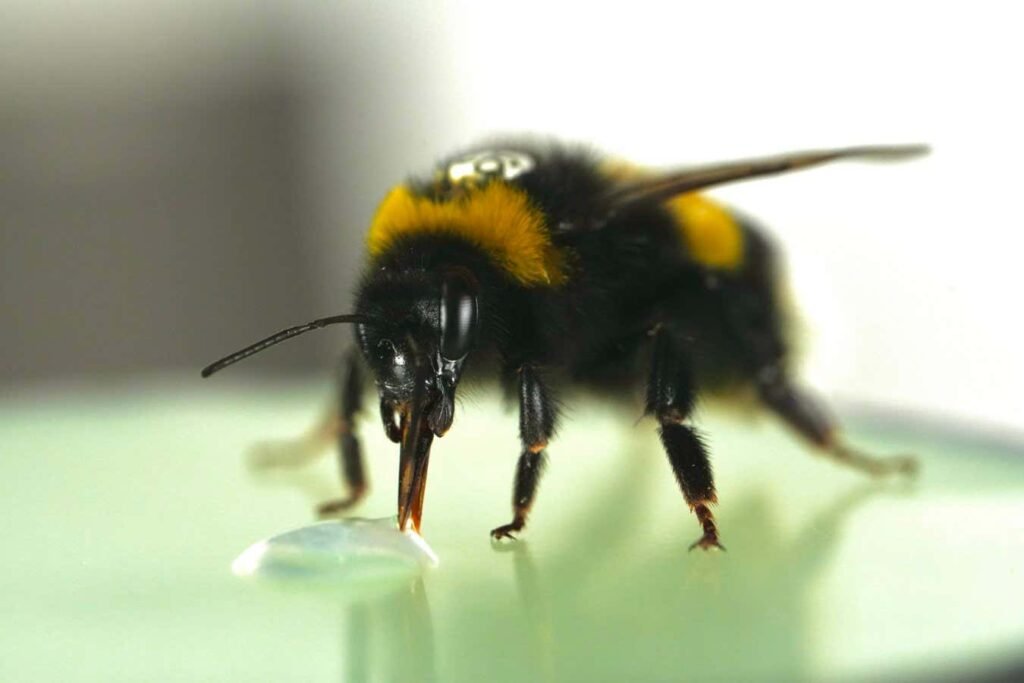
A groundbreaking study led by researchers at Queen Mary University of London has revealed that buff-tailed bumblebees (Bombus terrestris) can distinguish between short and long durations of visual signals to locate food. This unexpected time-processing ability challenges long-held scientific assumptions that only humans and a handful of larger-brained vertebrates possess the neural complexity required to measure time intervals accurately. In elegant lab experiments, PhD candidate Alexander Davidson and Dr. Elisabetta Versace trained the insects using yellow circles that flashed for varying lengths of time—such as comparing a 5-second flash to a 1-second flash. One duration offered a rewarding sugar solution, while the other was paired with a bitter quinine mixture. The bumblebees rapidly learned to associate the correct duration with sweetness, even successfully navigating the test when researchers scrambled total light exposure by using multiple short pulses to match the cumulative brightness of a single long flash.
This discovery is particularly remarkable because flashing light signals do not exist in the bees’ natural habitat, indicating a highly flexible, core cognitive processing skill that likely evolved for complex navigation or communication. Scientists have long been fascinated by the expansive intelligence packed inside a bumblebee’s poppy-seed-sized brain—which has already demonstrated capabilities in basic mathematics, understanding the concept of zero, and social learning. However, proving that an insect can solve duration-based tasks using such a minimal neural framework opens major new avenues for both evolutionary biology and technology. Experts believe understanding the precise biological mechanisms behind how these tiny creatures track time could directly inspire the creation of hyper-efficient, highly scalable artificial neural networks and miniature sensors capable of advanced speech and pattern recognition.