
Trinity Saioo and Traditional Millet Pioneers Honored with Krishi Gaurav Samman 2026
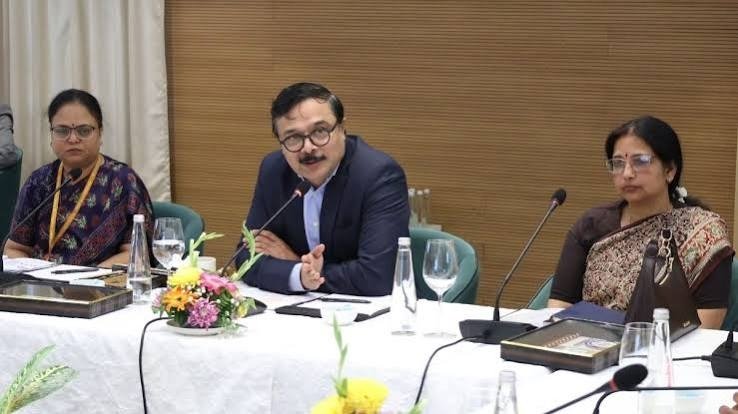
Six farmers and agripreneurs from Meghalaya were honored with the prestigious ‘Krishi Gaurav Samman 2026’ in recognition of their outstanding contributions to sustainable farming, biodiversity preservation, and rural entrepreneurship. The awards were conferred during the Academic Assembly 2026 held at the College of Post Graduate Studies in Agricultural Sciences (CPGSAS), a constituent of Central Agricultural University (CAU) located at Umiam in Ri-Bhoi district. The distinguished awardees included Chekjing Sangma from West Garo Hills for pioneering modern millet cultivation; Darapbiang Mulieh from West Jaintia Hills for promoting millet value addition; and Sitrian Surong, also from West Jaintia Hills, for preserving Meghalaya’s traditional millet heritage. Notably, two of these millet pioneers had previously received national recognition from Prime Minister Narendra Modi during the 139th episode of his ‘Mann Ki Baat’ broadcast for their efforts in reviving traditional crops. Furthermore, Trinity Saioo, widely celebrated as the ‘Lakadong Lady of Meghalaya’, was honored for her leadership in promoting indigenous Lakadong turmeric cultivation, while Jemnud Marpan of Ri-Bhoi district was recognized for conserving indigenous crop varieties and maintaining agricultural biodiversity. Completing the cohort, Midat M Binau, Professor of Practice at Manipur University, received the honor for transforming traditional spice crops into global market opportunities through innovative agripreneurial initiatives. Organized jointly by the Purvottar Janajati Shiksha Samiti (PJSS) and CPGSAS under the theme “Transforming Classrooms through NEP 2020: Integrating Indigenous Wisdom, Culture and Experiential Learning,” the assembly gathered 375 registered participants comprising academicians, educationists, and local farmers across the region. Delivering the keynote address, CAU Vice-Chancellor Dr. Anupam Mishra underscored the imperative of merging traditional tribal knowledge in forest management, natural resource conservation, and biodiversity with modern scientific innovations. Dr. Mishra emphasized that scientific documentation, systematic value addition, and community-driven enterprises remain vital to building sustainable rural livelihoods across the Northeast. The event concluded following robust interactive sessions and policy discussions focused on implementing experiential learning models within agricultural education frameworks.