
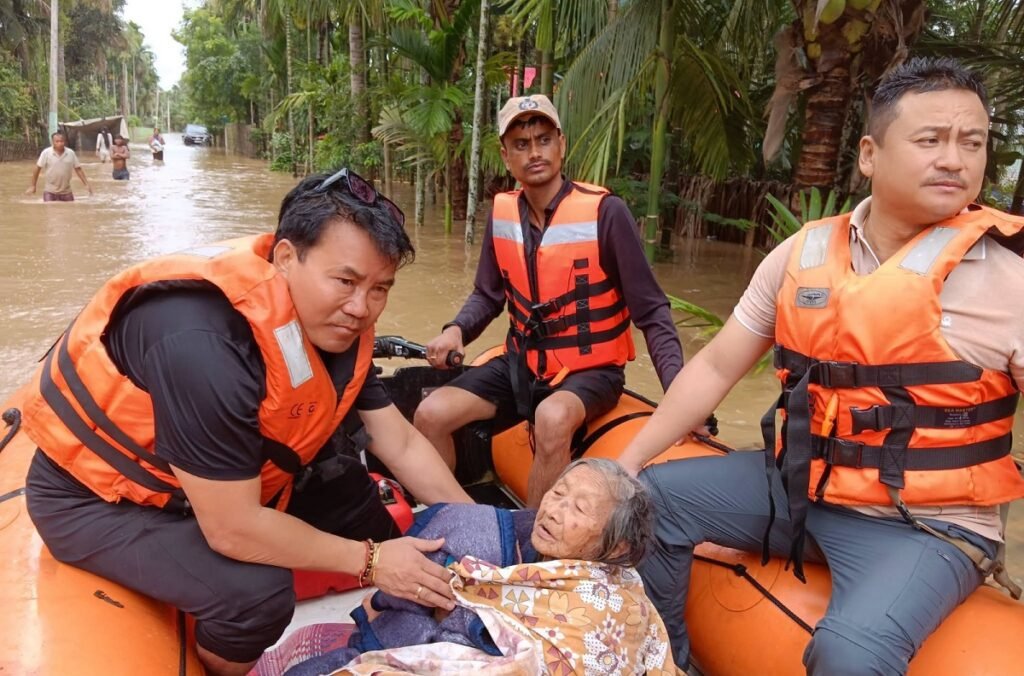
Upper Assam Floods: No Mobile Alert Before Disaster? Survivors Question Emergency Warning System
The devastating floods that struck Upper Assam on the night of July 19 have triggered widespread debate over the effectiveness of India’s mobile-based disaster warning system, with residents questioning why no emergency alert was issued before floodwaters inundated vast areas of Sivasagar, Charaideo and Jorhat districts.
The Cell Broadcast System (CBS), introduced by the Union government to send emergency alerts directly to mobile phones during natural disasters, had undergone nationwide trial runs earlier this year, including in Assam. The system was designed to warn citizens of imminent threats such as floods, earthquakes, landslides and cyclones through instant notifications across all mobile networks.
However, several flood survivors have claimed that no such alert reached their phones before the Dikhow River overflowed, leading to one of the worst flood disasters witnessed in Upper Assam in decades. The absence of a warning has led to questions over whether the emergency alert mechanism was activated and how effectively it functioned during the crisis. No official explanation has yet been issued regarding the matter.
Residents of severely affected villages have also alleged that the river began rising unusually from the morning of July 19 and that repeated appeals for assistance to local authorities received little or delayed response. Some survivors said rescue teams arrived only after floodwaters had already submerged large areas, while others claimed they had to rely on local volunteers for evacuation. These allegations have not been independently verified.
According to official figures released by Assam Chief Minister Himanta Biswa Sarma, floods have affected over 1.14 million people across 25 districts. At least 68 people have lost their lives, while eight remain missing. More than 29,900 people have been rescued, with over 71,000 taking shelter in 215 relief camps.
The state government has announced financial assistance and rehabilitation measures for affected families, while relief operations continue with the support of the National Disaster Response Force (NDRF), State Disaster Response Force (SDRF), armed forces and volunteers.
The disaster has also renewed discussions on disaster preparedness, early-warning systems and the need for stronger coordination between forecasting agencies and local administrations to minimise loss of life during extreme weather events.