
Opposition Slams Assam UCC Bill as “Political Agenda”, Raises Privacy and Constitutional Concerns
Opposition parties in the Assam Assembly on Tuesday strongly criticised the proposed Uniform Civil Code (UCC) Bill, describing it as a politically motivated move by the BJP government and demanding wider consultations with religious organisations, tribal groups and other stakeholders before the legislation is implemented.
During a heated discussion on The Uniform Civil Code, Assam, 2026 Bill, opposition legislators questioned the need for introducing a separate law, arguing that many of the issues covered under the proposed UCC are already addressed through existing legislation.
Congress Legislature Party (CLP) leader Wajed Ali Choudhury said laws dealing with child marriage, polygamy, marriage registration, divorce and alimony already exist in the country. He alleged that the BJP government introduced the Bill primarily for political reasons rather than legal necessity.
“The matters mentioned in the UCC are already governed through various laws. Then why has the UCC been brought?” Choudhury asked during the Assembly debate. He further argued that instead of simplifying legal procedures, the legislation could complicate matters further and interfere in people’s personal lives.
Questioning the exclusion of Scheduled Tribes from the proposed law, Choudhury said, “If tribals are excluded, how can the law be called uniform?” He also alleged that the BJP was using the UCC debate to divert public attention from pressing issues such as unemployment, floods and the condition of government schools in Assam.
Congress MLA Jakir Hussain Sikdar also criticised the government for allegedly introducing the Bill without adequate consultations with religious organisations and social groups. Referring to the 2018 Law Commission recommendations, Sikdar said wider stakeholder discussions were necessary before implementing such a sensitive law.
“In 2023, Prime Minister Narendra Modi had said there cannot be two laws within one household. Then why are certain communities being excluded from the UCC?” Sikdar questioned.
Congress MLA Nurul Huda moved an amendment demanding that all communities, including tribal groups, be brought under the ambit of the proposed legislation. He argued that the Constitution does not permit discrimination based on caste, religion or community.
AIUDF MLA Mazibur Rahman also opposed the Bill, stating that constitutional protections for minorities cannot be compromised in the name of Directive Principles of State Policy. Referring to Article 44 of the Constitution, which advocates a Uniform Civil Code, Rahman argued that many principles mentioned in the proposed law are already covered under Muslim Personal Law.
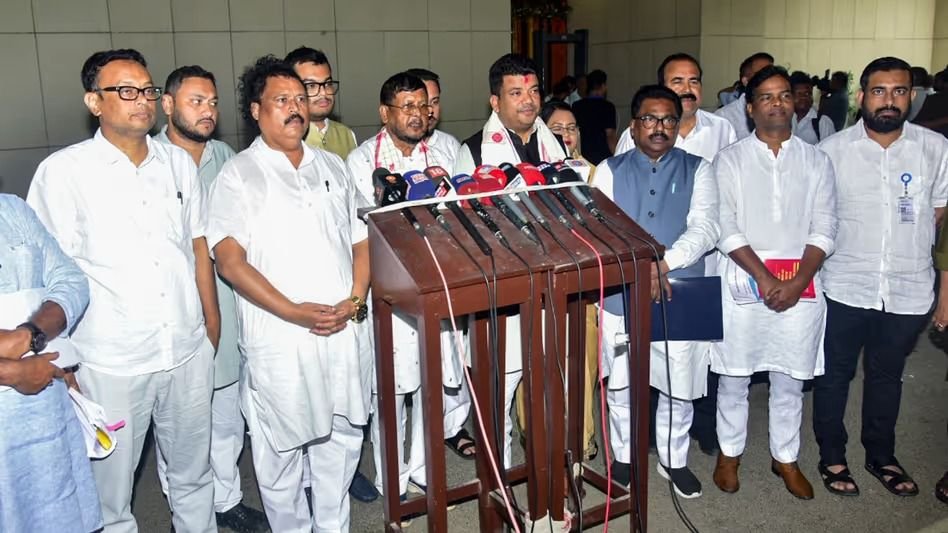
Raijor Dal president and MLA Akhil Gogoi launched a sharp attack on the proposed legislation, alleging that it would lead to excessive state interference and surveillance in the private lives of citizens. Addressing reporters, Gogoi claimed the law would empower bureaucrats and authorities to monitor personal relationships and lifestyles.
“The State has created a bureaucracy to monitor the intimate and private lives of people. There will be constant surveillance over how citizens live their lives,” Gogoi alleged.
He argued that such provisions violate constitutional protections related to privacy and contradict repeated observations made by the Supreme Court regarding individual freedoms and private life. Gogoi further accused the BJP-led government of attempting to impose moral policing through state machinery.
Calling the proposed law an “attack” on personal freedom, he questioned whether ordinary citizens would be subjected to continuous monitoring and interference in their relationships and lifestyles.
Meanwhile, lone Trinamool Congress MLA Sherman Ali Ahmed staged a walkout from the Assembly during the discussion, alleging that the government had introduced the Bill with “malicious intention”.
Although Ahmed said certain provisions such as fixing the minimum age for marriage and regulating live-in relationships were acceptable, he claimed some sections of the Bill violate constitutional rights and religious principles.
“The government cannot introduce laws violating Fundamental Rights by taking shelter under Directive Principles,” Ahmed said before walking out of the House in protest.
Ahmed also questioned the exclusion of tribal communities from the proposed legislation and argued that some provisions relating to marriage conflict with Islamic teachings and Quranic principles.
The Assam government had introduced the Uniform Civil Code Bill seeking to establish a common legal framework governing marriage, divorce, succession and live-in relationships irrespective of religion. The Bill proposes banning polygamy, making registration of live-in relationships mandatory and prescribing penalties, including imprisonment, for violations.
Despite strong opposition protests and demands for the Bill to be referred to a select committee for wider examination, the Assam Assembly later passed the Uniform Civil Code Bill through a voice vote. The legislation will now be sent to the President of India for assent before implementation.