
SC Casual Railway Workers are Central Govt employees, must get regular benefits, pension
Granting regular employee status to railway workers equivalent to central government employees, the Supreme Court today delivered a significant judgment. A Supreme Court bench comprising Justice Deepankar Datta and Justice Satish Chandra Sharma passed this order today while hearing a case concerning the regularization of railway employees.
The court ruled that even if these employees are managed under an extended structure by the railway department, they must be recognized as central government employees and provided with regular service benefits accordingly. The bench made it clear that there should be no hurdle in providing regular benefits to the central seasonal (casual) workers. The apex court explicitly stated today that the central government system cannot shirk its responsibility regarding the resolution of problems faced by seasonal workers. The main objective of this judgment is to ensure that a section of the workforce under the department does not face discrimination.
The case originated with an employee who joined the railway department in 1990 as a casual junction cleaner. After serving for a long period as a temporary worker, his services were regularized in February 2001 under a regular (pensionable) service format. Following this, the employee continued to provide uninterrupted service under the railway department. However, complications arose regarding his subsequent service continuity and other benefits when he retired.
The railway authorities extended his services beyond the regular retirement age, and when he retired in December 2012, the railway department denied him retirement financial benefits, citing policy irregularities. Furthermore, the audit department of the railways directed the employee to refund the excess money received.
To challenge this, the employee approached the Central Administrative Tribunal (CAT). The tribunal ruled in favor of the employee, stating that the central government employee cannot be subjected to financial distress and directed the department to regularize his services.
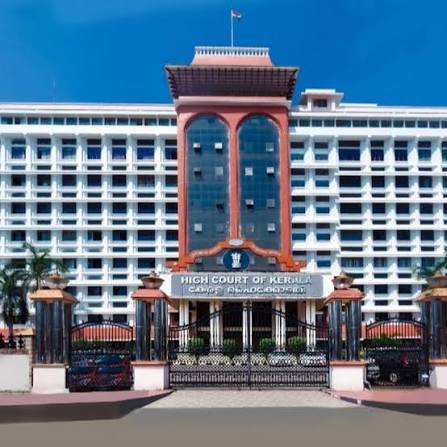
Against this order, the railway authorities approached a single-judge bench of a High Court. The High Court upheld the tribunal’s order in favor of the employee. However, challenging this, the railway department then approached a division bench of the High Court. The division bench set aside the order of the single-judge bench. Aggrieved by the division bench’s ruling, the helpless employee approached the Supreme Court. Setting aside the High Court’s division bench order, the Supreme Court delivered this landmark judgment today in favor of the railway worker.